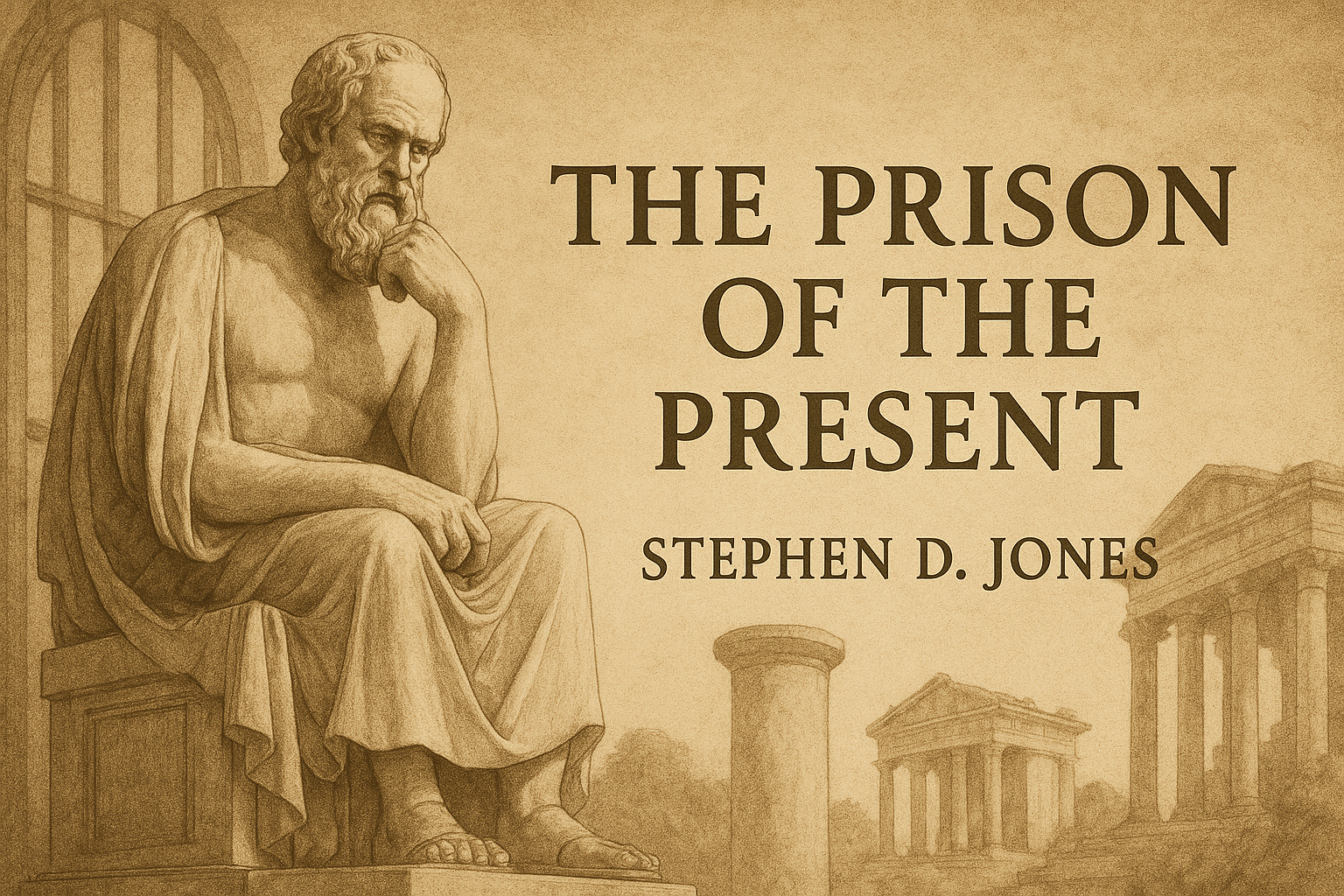
The Prison of the Present
Prologue
Know ye this: the burden of knowledge is not light. To the unlearned it is a lamp, yet to the wise it may become a shackle. For every truth discovered is a fetter wrought of iron, chaining the mind to what is and blinding it to what may be. The scholar, cloaked in his scrolls, peers into the abyss of time and beholds only the dim reflection of his own age. The future he sees is but the present stretched thin, its horizons bound by the categories of his day.
Thus do men of renown declare what cannot be done, though their lips are dust ere the deed is achieved. Thus do visionaries stumble, mistaking the narrow road of knowledge for the whole wide plain of possibility. He who knows too much of the present becomes the prisoner of the present.
The Scholar’s Curse
Lo, it is a cruel jest of fate that the more a man learns, the narrower grows his sight. For the smith who knows only the anvil shall forever dream of iron, and the sailor who knows only the tide shall never dream of the sky. Thus do the masters of one age become the blind men of the next, shackled by the very craft that made them mighty.
The Graves of the Impossible
Walk ye through the graveyard of the ages, and see how many impossibilities lie buried there. Men once swore by Heaven itself that heavier-than-air craft could never rise from the earth; yet the sky is now furrowed by a thousand wings. Physicians once scoffed at the notion of unseen pests that lay men low; yet the germ, invisible and patient, proved the mightiest of conquerors. Lightning was thought a wrath of the gods, never to be chained; yet it runs tame through the veins of every city. The moon was a silver lantern to be worshiped from afar; yet men have trod their boot-heels in its dust.
So too shall our proudest denials be humbled. For each age mistakes its boundary for the edge of the world, and each age is mocked by the future that breaks it. To declare a thing impossible is to dig a shallow grave. And time itself will see it filled.
The Iron Fetters of Knowledge
Behold the trap, subtle and unseen. The mind, once fattened on the feast of fact, grows sluggish, unwilling to stray beyond the banquet-hall of its own certainties. Words, forged in the furnace of today, bear no tongue for the marvels of tomorrow. And the imagination, once wild and unbroken, doth grow timid, pacing the same worn ground where knowledge hath already built its roads. This is the prison of the present, and many a proud thinker hath rotted within its walls.
The Tongue’s Dominion
Know ye also that thought itself is bound by words, for the mind of man doth speak within him. He who hath but a meager tongue shall think meager thoughts, circling ever the same ground. But he whose tongue is broad and many-hued may wander far, naming what others cannot name, beholding what others cannot behold. For words are not idle sounds; they are the keys that open chambers in the mind. Without them, those chambers remain forever shut.
Consider how the pauper of speech knows not the difference betwixt awe and dread, and so confuses both in silence. Consider how he who hath no word for nuance shall grind every matter into coarse stone, never tasting the fine grains of truth. Thus the poverty of language becometh the poverty of thought, and the prison of the present is made doubly strong.
Therefore let the Seeker arm himself with words as with a sword and shield. Let him gather a treasury of speech, wide and varied, that his own inner voice may climb to higher halls. For as the tongue groweth, so too doth the mind; and the man who would unbind himself from the fetters of his hour must first learn to speak with the tongue of many ages.
The Path of Forgetting
Yet there are those who learn the art of unknowing. They speak in the tongues of ages long past, and by that sorcery unbind themselves from the jargon of their day. They take upon themselves the eyes of the child, who knows not what cannot be done, and so beholds the impossible without fear. They wander the false worlds of “what if,” and by such wandering do stumble upon truths the sober scholar dares not seek. Forgetting, they remember; discarding, they discover.
The Horizon Unchained
Mark this well, O’ Seeker: those who would lead must not be chained to their own hour. For the world to come will not honor the limits of today, nor be tamed by the tools now clutched in trembling hands. He who cannot slip the fetters of knowledge doth mistake the horizon for the edge of the world, and doth perish in ignorance though libraries tower at his back. But he who dares to look beyond, who dares to think unmoored, shall find the paths others cannot see, and shall tread his sandaled feet upon the golden halls of knowledge.
Epilogue
Therefore let the seeker beware: knowledge is a sword that cuts both ways. Wield it without wisdom, and it shall bind thee fast in chains of thine own forging. But cast off the presumption that tomorrow must wear the garments of today, and thou shalt walk unbound across fields yet uncharted.
For the future is not born from the weary bones of the present, nor fashioned solely by the tools men clutch in trembling hands. It is conjured by those who dare to think past the walls of their own hour, as do all who unshackle their sight. Let the mind unshackle itself, and behold. What once was deemed impossible shall rise from the mist as common fact.
So stand upon the threshold with eyes unclouded, O’ Thinker, and look not for reflections of now. The world to come hath no master but imagination, and it shall reveal itself only to those bold enough to forget what they know.
Χαλεπὰ τὰ καλά
Khalepá tà kalá
— Dr Stephen D. Jones
#PhilosophyOfKnowledge #FutureThinking #LeadershipWisdom #LanguageAndThought #ImaginationUnbound